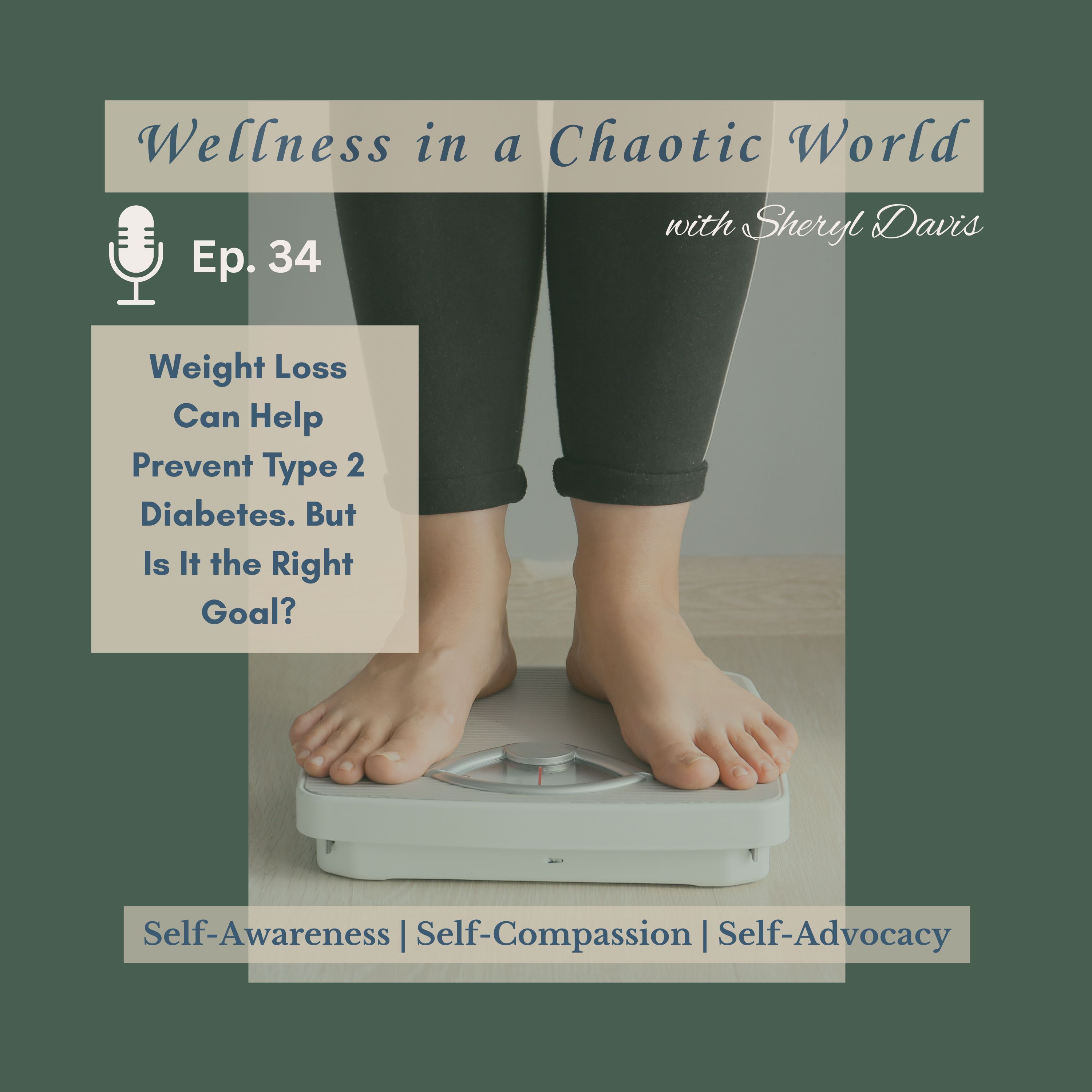
| Yes, there is evidence that losing weight can reduce the risk of developing type 2 diabetes, particularly for people who are overweight or obese. But “lose weight” is also kind of a strange lifestyle recommendation when you think about it. Losing weight isn’t a behavior. You can’t wake up tomorrow morning and do weight loss. You can change what you eat. You can walk more. You can strength train. You can work on your sleep. You can pay attention to whether your meals actually satisfy you. You can look at what happens when you’re stressed or exhausted and food becomes the easiest source of comfort. Those are things you can actually do. Your weight may change as a result. And that distinction matters, especially if focusing on the number on the scale leaves you feeling frustrated, ashamed or like nothing you do is working. |
What does the evidence actually say about weight loss and type 2 diabetes?
| One of the most important studies in type 2 diabetes prevention is the Diabetes Prevention Program. The study included more than 3,000 people at high risk for developing type 2 diabetes. One group participated in an intensive lifestyle intervention with a goal of losing about 7% of their starting body weight and getting at least 150 minutes of physical activity each week. After about three years, participants in that group had a 58% lower risk of developing type 2 diabetes compared with the placebo group. So the recommendation to lose a modest amount of weight to reduce your risk of type 2 diabetes didn’t come out of nowhere. There’s evidence behind it. But there’s a part of the study that can get lost when we boil the message down to “lose 5 to 7% of your body weight.” Participants weren’t simply handed a weight-loss goal and sent on their way. They received intensive support. They worked on food, physical activity and behavior change. During the first 24 weeks alone, participants met individually with trained staff at least 16 times, with continued support afterward. The goal included weight loss. But what people actually did was work on behaviors. That’s a whole lot different from leaving a doctor’s appointment knowing you should probably lose some weight and wondering what you’re supposed to do next. |
Weight loss gives you an outcome. It doesn’t tell you how to get there.
| Imagine I told you that you needed to save $10,000. Okay. How? You’d probably need to look at what’s happening with your money. What’s coming in? What’s going out? Where is it going? What could realistically change? Maybe you’re spending money on things you don’t care about anymore. Or maybe you’re already stretched incredibly thin and the problem isn’t your spending at all. You wouldn’t know until you looked. We can approach weight with that same kind of curiosity. Instead of immediately asking: How do I lose weight? What happens if we ask: What might be contributing to my weight in the first place? That question can lead somewhere very different. |
“Calories in, calories out” doesn’t tell us the whole story
| At its most basic level, body weight is connected to energy balance. We get energy from food, and our bodies use energy. That part is real. The problem is when that gets reduced to: It’s all calories in, calories out. Because what does that actually tell you about what to do? If someone is consistently taking in more energy than their body is using, why is that happening? Are their meals satisfying? Are they hungry much of the day? How much protein and fiber are they eating? How much are they moving? What does their sleep look like? What about stress? Are medications part of the picture? What food is available and affordable to them? How much time do they have to cook? Are hormonal changes playing a role? What does their relationship with food look like after years or decades of dieting, restriction or using food for comfort? All of those things can exist inside the calories-in, calories-out equation. Saying someone consumed more energy than their body used may describe what happened from an energy standpoint. It doesn’t necessarily explain why it happened. And it definitely doesn’t tell you what to do next. |
Food isn’t just calories, either
| This becomes especially important when we’re talking about metabolic health. Food provides energy, but it much more than that. It provides the building blocks and information our bodies use to grow and heal. Different meals can also leave us feeling very different. How full are you afterward? How long do you stay satisfied? How much protein and fiber did you get? Did you enjoy what you ate? Are you hungry again an hour later? If the only question we’re asking is, How can I eat fewer calories?, we can miss a lot of useful information. You can cut calories by skipping meals. You can eliminate entire categories of food. You can severely restrict how much you eat. You can spend much of the day hungry. Those things might make the number on the scale go down. But if the larger goal is supporting your metabolic health and reducing your risk of type 2 diabetes, making your body smaller isn’t the only thing that matters. A more useful question might be: How can I nourish this body in a way that supports my metabolic health and still works in my actual life? |
What’s underneath the number on the scale?
| Our bodies and our lives change. Your activity may be different than it was 10 or 20 years ago. Your body composition may have changed. Your sleep may be different. Hormonal changes may be part of the picture. And then there’s everything happening in your actual life. Maybe you used to have a job where you were on your feet all day and now you sit in front of a computer. Maybe you’re caring for kids, parents or both. Maybe you’re working more and sleeping less. Maybe your stress level bears absolutely no resemblance to what it was when you were 25. Maybe the way you shop, cook and eat has completely changed. None of that means gaining weight as you get older is inevitable. It means the circumstances influencing your weight today may be different from the circumstances you were living in years ago. So rather than starting with a directive to eat less or lose weight, it may be more useful to ask what’s actually happening. Maybe your meals aren’t very satisfying and you’re hungry again an hour later. Maybe you barely move during your workday. Maybe you’ve spent years restricting food during the day and then feeling out of control around it at night. Maybe you regularly sleep five or six hours. Maybe your meals don’t contain much protein or fiber. Maybe strength training hasn’t been part of your life. Or maybe you’re already doing quite a few things that support your health. That’s useful information too. Now we’re getting underneath the number and finding something we can actually work with. |
Behaviors can matter even before your weight changes
| This is particularly important when we’re talking about prediabetes. Many of the behaviors that can support metabolic health have benefits that aren’t dependent on losing weight first. Walking is a great example. When your muscles contract, they can take up more glucose. So walking isn’t valuable only because it burns calories or because it might eventually contribute to weight loss. The movement itself is doing something. And that changes how we can think about progress. Suppose you start walking regularly. A month later, you step on the scale and the number hasn’t changed. Did walking not work? If weight loss is the only thing you’re measuring, it might feel that way. But you’re moving more. You’re using your muscles. Maybe your fitness is improving. And you’ve spent the last month building a routine that you might actually be able to keep doing. There may be things happening inside your body that aren’t showing up on your bathroom scale. Those things count too. |
What if weight is information rather than the assignment?
| The evidence tells us that modest weight loss can meaningfully reduce the risk of developing type 2 diabetes for people who are overweight or obese. I don’t want to lose that point. But that doesn’t necessarily mean the number on the scale has to become the entire project. Maybe weight is one piece of information. And maybe the assignment is getting curious. What are you eating? How are you moving? How are you sleeping? What happens when you’re stressed? What makes taking care of yourself easier or harder? What could change in your environment to better support your health? Because if the goal is reducing your risk of type 2 diabetes, the goal isn’t simply to make your body smaller. It’s to figure out what you can do, in the body and life you actually have, to support your metabolic health. And curiosity about yourself and your environment may give you a much more useful place to start than a number someone else handed you. This article is for educational purposes only and isn’t intended to diagnose, treat or provide individualized medical or nutrition advice. If you have prediabetes or concerns about your weight or blood sugar, talk with your healthcare team before making major changes to your diet or exercise. |
Working Together, One-on-One
Your goals, your pace—guided by evidence-based strategies and compassionate support
Working with me means you’ll have a supportive partner who sees you as the expert of your own life. I’ll help you uncover your strengths, quiet the self-doubt, and build habits that actually stick.
Our sessions are collaborative and non-judgmental, designed to meet you where you are and move you toward the changes that matter most to you—whether that’s managing stress, boosting your energy, creating more balance in your day-to-day, or building routines that support you instead of overwhelm you.
Click here to apply
3-Month Coaching Package
Space for real transformation—without the overwhelm.
What’s Included:
✨ Six 30-minute Coaching Sessions (bi-weekly)
Deep, spacious sessions where we explore your strengths and your “why” as well as what’s working, what’s not, and where you want to go. You’ll leave each session with clear next steps and practices that feel doable.
✨ Ongoing Support Between Sessions
Access to me via email for check-ins, accountability, and encouragement when you need it most.
✨ Personalized Resources and Tools
Curated recommendations just for you—whether that’s mindset exercises, journal prompts, recipes, movement suggestions, or stress-reducing techniques—so you’re supported between sessions.
✨ A Holistic Approach Rooted in Both Science and Traditional Wisdom-Based Practices
We’ll draw from behavior change science, mindfulness, intuitive practices, and more to create meaningful, lasting change.
Health & Wellness Coaching with Me is for You if:
- You’re tired of feeling tired—and ready for more energy and clarity
- You’ve tried making lifestyle changes but can’t seem to make them stick
- You want support that goes deeper than surface-level advice
- You’re craving sustainable habits that feel nourishing, not punishing
- You’re ready to reconnect with your own inner wisdom and build trust in yourself again

Leave a Reply